Dust, Data, and Discovery: The Race to Digitise Britain's Natural History Collections
In a temperature-controlled basement beneath one of Britain's oldest natural history institutions, a technician positions a dried fern specimen beneath a high-resolution camera. The plant was collected in 1847. Until last year, it had been seen by perhaps a dozen researchers. By the end of this month, it will be visible to anyone on earth with an internet connection. Multiply this scene by several million, and you begin to appreciate the scale of what is currently under way across the United Kingdom's museum sector.
Britain's natural history collections are, by any measure, extraordinary. The Natural History Museum in London alone holds approximately 80 million specimens spanning more than four centuries of scientific inquiry. The Royal Botanic Gardens at Kew maintains herbarium sheets numbering in the millions. The Oxford University Museum of Natural History, the Manchester Museum, the National Museum of Scotland — each holds collections of comparable depth and complexity. Together, they represent one of the most comprehensive archives of biological and geological life ever assembled.
Yet for much of their existence, these collections have functioned as physical silos. A researcher wishing to examine a particular beetle species collected in the Victorian era would need to travel to the relevant institution, arrange access, and work through drawers of pinned specimens by hand. Cross-referencing collections held at multiple sites was, in practical terms, enormously difficult. The knowledge locked within these archives was real, but its accessibility was profoundly limited.
The Urgency Behind the Effort
The impetus to digitise has intensified considerably over the past decade, driven by two converging pressures. The first is physical deterioration. Many specimens are fragile, and the paper records accompanying them — field notes, collection registers, correspondence between naturalists — are subject to the ordinary ravages of time. Ink fades. Paper becomes brittle. Labels detach. Institutions have long understood that physical preservation alone cannot guarantee the permanence of these records.
The second pressure is scientific. As ecology and environmental science have become increasingly data-hungry disciplines, researchers have recognised that historical collections represent something invaluable: a longitudinal record of biological life stretching back centuries. Specimens collected in the 1780s carry information about the geographical distribution of species at a time before industrialisation reshaped the British landscape. Herbarium sheets from the mid-nineteenth century document plant phenology — the timing of flowering, leafing, and fruiting — at a moment predating modern climate change. This is not archival curiosity. It is primary scientific data.
"We have been sitting on one of the most significant climate datasets in existence without fully realising it," notes one researcher involved in a major digitisation initiative at a leading British institution. "When you can georeferenced a specimen collected in 1863 and compare its flowering date with contemporary observations of the same species, you are doing climate science across a timeframe that no modern study could replicate."
Technologies Transforming the Process
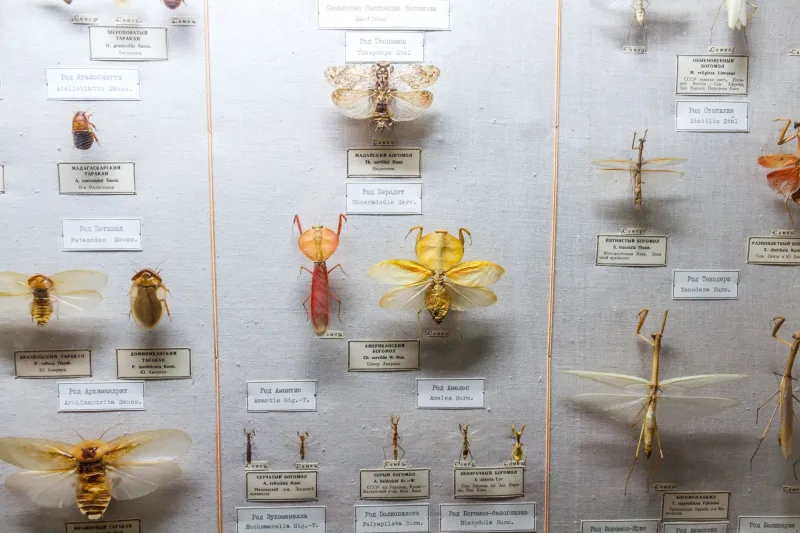
The methods being deployed vary considerably depending on the type of material involved. For pinned insect specimens, flatbed and overhead photographic systems can capture dozens of objects per hour, with automated pipelines feeding images into databases where machine learning algorithms assist with species identification and label transcription. For herbarium sheets — the pressed and dried plant specimens that form the backbone of botanical collections — large-format scanners produce images of sufficient resolution to reveal structural details invisible to the naked eye.
Perhaps most technically demanding is the digitisation of handwritten records. Field notebooks, correspondence, and collection registers were written in scripts ranging from copperplate to near-illegible personal shorthand. Optical character recognition software, trained on historical handwriting, has improved substantially in recent years, though human verification remains essential. Crowdsourcing platforms have emerged as a partial solution: volunteers, many of them scientifically literate members of the public, transcribe records through structured online interfaces, contributing labour that no institution could afford to employ professionally.
The DiSSCo (Distributed System of Scientific Collections) initiative, a European infrastructure project in which British institutions participate, is working to harmonise digitisation standards across national borders, enabling researchers to query collections from multiple countries through a single interface. The potential for comparative ecological studies — tracking species distributions across continental scales using historical data — is considerable.
New Science from Old Specimens
The scientific returns from digitisation are already materialising. Studies drawing on digitised herbarium collections have documented measurable shifts in plant flowering times consistent with rising temperatures, providing empirical grounding for projections that previously relied on shorter observational windows. Analyses of historical insect collections have identified population declines in pollinator species that predate the periods covered by conventional monitoring schemes, complicating narratives about the causes of those declines.
In some cases, digitisation has revealed discoveries that were hiding in plain sight. Specimens misidentified in the nineteenth century have been reclassified using modern taxonomic knowledge, occasionally revealing that what was catalogued as a single widespread species was in fact two or more distinct ones. This has implications not only for taxonomy but for conservation, since accurate species counts are foundational to threat assessments under frameworks such as the IUCN Red List.
Geological and palaeontological collections are yielding comparable surprises. Fossil specimens re-examined following digitisation have in several instances been found to preserve details — fine surface textures, trace element signatures — that earlier researchers lacked the instrumentation to detect. The specimens had not changed; the capacity to interrogate them had.
Challenges That Remain
The work is far from straightforward. Funding for digitisation projects is frequently project-based and time-limited, creating uncertainty for institutions attempting to sustain long-term programmes. The technical infrastructure required — servers, data management systems, long-term digital preservation protocols — demands ongoing investment that sits awkwardly within the financial models of publicly funded cultural institutions.
There is also a more philosophical tension at the heart of the enterprise. Digitisation makes collections more accessible, but it does not replace the physical objects themselves. A high-resolution image of a herbarium specimen cannot be subjected to chemical analysis; a photograph of a pinned beetle cannot yield DNA. The digital record is an index, not a substitute. Ensuring that enhanced accessibility does not diminish the perceived value of maintaining the physical collections is a concern that curators raise consistently.
Skills present a further constraint. The expertise required to work with historical natural history collections — taxonomic knowledge, familiarity with historical collection practices, palaeographic competence for reading old scripts — is not easily or quickly acquired. As senior curators retire, institutions face a genuine challenge in transferring institutional knowledge to the next generation of collection specialists.
A Scientific Resource for the Long Term
What is emerging from these efforts is something that did not exist a generation ago: a distributed, queryable, and continuously expanding scientific database built from centuries of accumulated observation. The naturalists who collected these specimens — many of them amateurs, clergy, country physicians, and colonial administrators — could not have imagined that their careful labelling and preservation would eventually contribute to twenty-first-century climate research.
Britain's natural history collections were built on a culture of meticulous documentation. The task now is to honour that legacy by ensuring it becomes fully legible to the science of the present. The specimens have waited long enough.


