Lost in the Landscape: The Quiet Disappearance of Fieldwork from British Science Degrees
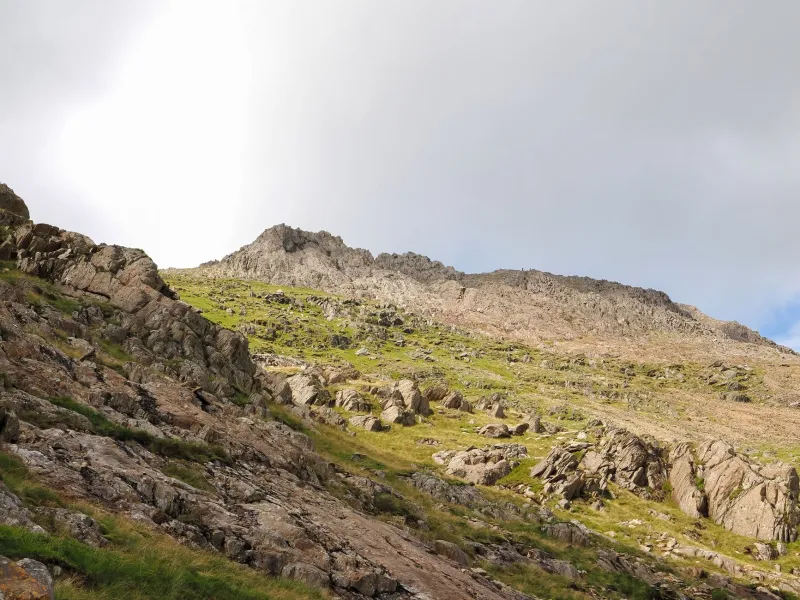
There is a particular kind of knowledge that cannot be acquired in a lecture theatre. It lives in the weight of a rock hammer, in the moment a student first distinguishes a clay-rich horizon from a sandy one by pressing soil between their fingers, or in the quiet discipline required to conduct a transect survey across a windswept hillside in the Pennines. For generations of British scientists, this embodied, outdoor learning formed the backbone of a rigorous scientific education. Today, that backbone is being quietly removed.
Across universities in England, Scotland, Wales, and Northern Ireland, field-based components of undergraduate science programmes are being scaled back, condensed, or eliminated entirely. The changes rarely attract press releases or formal announcements. They appear instead as footnotes in module handbooks, as reductions in residential field course durations, or as the quiet substitution of a week in Snowdonia for a software-based terrain simulation. The cumulative effect, however, is profound.
The Institutional Logic of Retreat
Universities are not withdrawing fieldwork arbitrarily. The pressures driving this retreat are structural and, in isolation, each appears reasonable. The funding model governing English higher education has created an environment in which departments must justify every pound spent on student-facing activity against measurable outcomes. Field courses are expensive: they require transport, accommodation, specialist equipment, field safety officers, and staff time that extends well beyond the standard working week. When budgets are cut and course leaders are asked to identify savings, a residential field course in the Scottish Highlands presents an obvious target.
Liability concerns compound the financial calculus. The expansion of institutional risk management frameworks over the past two decades has made organising field activities increasingly burdensome. Risk assessments for remote or coastal environments can run to dozens of pages. A single incident — a student injury, a near-miss on a cliff face — can trigger reviews that result in permanent programme changes. Many academics report that the administrative overhead alone is now sufficient to deter colleagues from proposing new field components, even when the educational case is strong.
The rise of high-quality digital alternatives has provided institutional cover for these decisions. Virtual geological mapping tools, species identification databases, and remote sensing platforms are genuinely impressive, and their proponents argue, not without justification, that they democratise access to scientific environments that some students could never otherwise afford to visit. Yet the substitution of simulation for experience rests on a misunderstanding of what fieldwork is actually for.
What Is Lost When the Field Disappears
Fieldwork is not primarily a mechanism for data collection. It is a mode of scientific formation. When a geology student spends three days mapping the structural geology of a Pembrokeshire headland, they are not simply learning to identify rock types — they are learning to tolerate uncertainty, to revise interpretations in light of contradictory evidence, to work collaboratively under physical and cognitive pressure, and to develop the spatial reasoning that no amount of screen-based practice fully replicates. These are precisely the capacities that distinguish a scientist capable of original inquiry from one who can competently execute prescribed procedures.
Ecologists and environmental scientists face a parallel impoverishment. The ability to design and conduct a meaningful field survey — to understand how habitat heterogeneity affects sampling strategy, to recognise the difference between a genuinely rare species and a recording artefact — depends on accumulated hours of outdoor practice. It is, in the truest sense, a craft, and crafts cannot be learned by watching demonstrations. Britain's ecological monitoring infrastructure, from the Countryside Survey to the national pollinator monitoring schemes, depends on scientists who possess precisely this kind of fluency. If universities cease to produce them, the gap will not be filled by software.
There is also a motivational dimension that institutional risk assessments cannot easily quantify. Many working scientists trace their commitment to their discipline to a formative outdoor experience — a fossil found on a Jurassic Coast beach, a first sighting of a rare wading bird on a Welsh estuary, the sudden, vertiginous comprehension of deep time that comes from standing inside a glacial erratic. These are not incidental pleasures; they are the moments at which abstract scientific knowledge becomes personally meaningful. Removing them from undergraduate education does not merely reduce technical competence — it risks reducing the number of young people who choose to persist in science at all.
A Structural Problem Requiring Structural Solutions
The retreat from fieldwork is not, at its core, a story about individual institutional failures. It is a symptom of a funding and governance framework that systematically undervalues experiential learning. The Research Excellence Framework rewards publications and grants; the Teaching Excellence Framework rewards student satisfaction scores and graduate employment outcomes. Neither instrument is well-designed to capture the long-term value of a student who spends a cold morning in February learning to read a floodplain.
Several professional bodies have begun to respond. The Geological Society of London has published guidance emphasising the indispensability of fieldwork to accredited geology degrees, and a small number of universities have sought to protect field course provision by establishing dedicated endowments or partnership arrangements with environmental charities and research institutes. These initiatives are welcome, but they remain fragile and unevenly distributed. A student at a well-resourced research-intensive university in southern England may still enjoy a relatively rich programme of outdoor learning; their counterpart at a less affluent institution in the north-east may not.
Policy intervention is arguably overdue. A national framework for fieldwork provision in accredited science programmes — one that sets minimum standards for outdoor learning hours and provides ring-fenced funding to support institutions that lack the resources to deliver them independently — would represent a meaningful step. The model need not be prescriptive; it could allow considerable flexibility in how institutions meet the standard while ensuring that the standard itself is not abandoned under financial pressure.
The Longer View
Britain possesses an extraordinary scientific landscape, in both the literal and figurative sense. Its geology is among the most varied and historically significant on earth; its ecological diversity, though diminished, remains scientifically rich; its coastlines, uplands, and river systems continue to serve as living laboratories for researchers across multiple disciplines. That this landscape should become progressively inaccessible to the scientists being trained to study it is a quietly serious development.
The argument for restoring and protecting fieldwork in British science education is not nostalgic. It is not a defence of tradition for its own sake. It is a claim about what rigorous science actually requires — the capacity to move between the abstract and the concrete, to test understanding against the irreducible complexity of the physical world, and to develop the judgement that only experience can confer. Universities that allow this capacity to atrophy are not merely offering a diminished education. They are, in a meaningful sense, producing a different kind of scientist: one less equipped to encounter the world on its own terms.